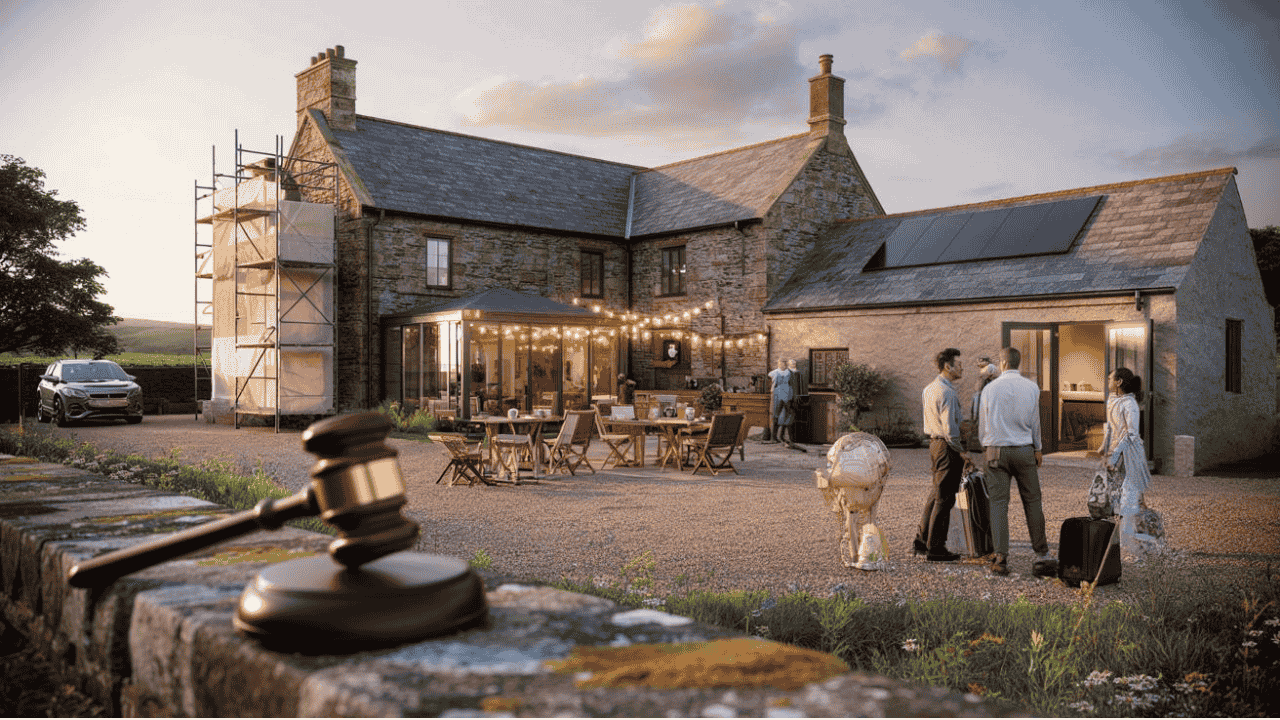
Across Britain’s rural heartlands, a quiet anxiety has set in. Prices jump, tax rules tighten, and families who’ve held the same land for generations are suddenly weighing valuations, trusts, or sales. The terrain of heritage and farmland is shifting — and with it, the old calculus of pride versus practicality.
The Coming Tax Squeeze
From April 2026, agricultural inheritance relief — the bedrock of many family transitions — faces a cap at £1 million, with a 20% charge above that threshold, payable in instalments over ten years. The Treasury says it’s targeting around 500 of the largest holdings annually. On the ground, the reaction feels sharper.
In Devon, breeders and growers now add columns to the family ledger. One farmer, Adam Stanbury, worries for his three daughters. By his estimate, a £400,000 duty bill could force a partial sale if land values stay high. “We plan for births and weddings,” he told local papers, “now we plan for tax.”
The UK Treasury’s consultation papers argue that sustainable public finances require fairer relief limits, but the change hits at a time when margins already look thin. In 2023, 17% of UK farms posted no profit, and only 41% cleared £50,000, according to DEFRA’s farm accounts.
Auctions and Appetite
Yet the market tells a parallel story: appetite for character remains fierce. Near Honiton, a Grade II listed farmhouse with six bedrooms, a collapsed gutter, and a guide price of £17,000, triggered a three-day bidding war. Fourteen bidders, roughly 350 offers later, and the hammer fell at £266,500 — fifteen times the estimate.
Guide £17,000. Final price £266,500. Three days. Fourteen bidders. About 350 bids. Six bedrooms, and a long to-do list.
Why the frenzy? Character, certainly — but also the promise of future income. Heritage buyers move fast when they see potential for events, short-stays, or branding power. A listing slows quick alterations but preserves value through protected context. Buyers want charm that lasts; planners want stability. Auctions, meanwhile, compress time and show what the market really thinks.
When Heritage Learns to Earn
In Kingston, Devon House proves that history can cash-flow. Built in 1881 for George Stiebel, Jamaica’s first recorded millionaire, the wooden Georgian mansion now anchors a public cultural hub. There’s food, retail, and the famed Devon House I Scream — once dubbed a “must-visit for ice cream” by a travel magazine back in 2011.
The site gained national heritage status in 1990 and has thrived by blending conservation with commerce. Ticketing, shops, and events build recurring revenue while keeping its verandas and fretwork intact.
| Revenue Stream | Estimate (Annual) | Notes |
|---|---|---|
| Entry & Tours | £120,000 | Modest ticket price, steady local visitors |
| Retail & Food | £200,000 | Anchor tenants and events |
| Private Hire | £80,000 | Weddings, launches |
| Total | ~£400,000 | Supports maintenance and staffing |
A heritage site that trades daily creates its own safety net — income tied to place rather than grants.
Cash Flow Is the New Conservation
For many rural owners, cash flow now defines whether heritage feels like an asset or a liability. One country house in mid-Devon, with an adjoining stable block, modelled a modern hybrid: six guest suites, a small café, and a dozen event weekends per year.
- Guest suites at £145 nightly, 55% occupancy → £174,000 gross.
- Café kiosk: £1,200 net weekly over 45 weeks → £54,000.
- Twelve events at £3,000 margin each → £36,000.
- Total gross: ~£264,000, with a 35–40% net margin after staff and utilities.
That covers a roof fund and the loan interest on conservation upgrades — the kind of math that lets history pay its own bills.
But capex bites: each suite at heritage standard might cost £45,000. Access, fire safety, drainage, and heating modernisation all add up. A phased plan — accommodation first, events second, café third — keeps ambition tethered to cash.
(Image suggestion: /mnt/data/1d62bbcc-7a55-440c-aacc-4625ff4ea419.png — “A restored rural estate balancing preservation and income.”)
New Playbook: Planning Meets Pragmatism
Policy shifts mean succession conversations are moving earlier. Families now weigh gifts, trusts, or partial sales before 2026. Accountants highlight instalment options but warn liquidity still matters. Some owners look to auction sales for transparency and quick settlement; others prefer private agreements that preserve access rights and heritage controls.
Two overlooked levers:
- Digital reach — licensing spaces for photography, streaming, and online classes.
- Climate adaptation — discreet solar slates, rainwater collection, and improved drainage reduce costs and earn green grants.
Every reversible upgrade that saves on utilities protects both fabric and finances.
Know the Rules of the Stone
Anyone stepping into listed ownership should learn the vocabulary.
- Grade II allows sensitive internal change; Grade II* or Grade I require tighter oversight.
- Conservation statements pay off at planning time.
- Keep a repair log with materials and methods — future surveyors (and buyers) value the transparency.
Heritage that earns survives; heritage that waits for subsidy risks dust and debt.
FAQs
What exactly changes in 2026 for farm inheritance?
The proposed UK reform caps agricultural inheritance relief at £1 million, with a 20% tax above that threshold, payable over ten years.
Who is affected most?
Roughly 500 large estates per year, but smaller mixed holdings could also feel pressure if values have appreciated sharply.
Are auctions still a good route for heritage properties?
Yes. They offer price discovery and fast closure, though buyers must factor renovation and listing restrictions.
How can heritage estates stay viable?
Blend conservation with commerce — accommodation, events, retail, and digital licensing diversify income.
What are key planning tips for listed buildings?
Document every material change, use reversible methods, and consult heritage officers early to avoid costly delays.