
Old market gardeners had a trick for keeping apples through winter — and it didn’t hum, click, or draw power. Their method was as low-tech as it was effective: breathable crates, humble fillers, and a cool, steady corner of the shed.
Why Old Methods Still Work
Two culprits ruin stored fruit fast — temperature swings and humidity. Warm air speeds ripening and draws moisture from the flesh. Sudden chills cause condensation that feeds mold. Add poor ventilation, and ethylene gas builds up, pushing fruit to overripe faster. One bruised apple sets off a rot chain through the whole crate.
That’s why heritage growers built systems to breathe and buffer instead of seal. Their approach mimicked the forest floor — shaded, cool, dry, and never airtight.
Choose the Right Apples
Not every apple is built to keep. Soft dessert types collapse in weeks. Firm, dense late-season varieties hold for months. European keepers like Belle de Boskoop, Reinette grise du Canada, and Calville blanc d’hiver earned fame for lasting through February. In the UK and U.S., Egremont Russet, Northern Spy, Arkansas Black, Winesap, and Rome Beauty still rank among the most reliable.
| Region | Recommended Varieties | Storage Life |
|---|---|---|
| UK | Egremont Russet, Belle de Boskoop | Up to 4 months |
| U.S. | Northern Spy, Winesap, Rome Beauty | 3–5 months |
| Europe | Calville blanc d’hiver, Reinette grise | 5+ months |
The sweet spot for long storage? 4–8°C (39–46°F), with good airflow and steady humidity. Too warm, and apples age in weeks. Too damp, and mold wins.
Building a Classic Storage Crate
- Line the base of a wooden or slatted crate (remove splinters first).
- Add a thin layer of dry sand, straw, or sawdust — the filler must breathe.
- Place apples stem-down, not touching.
- Cover with more dry filler.
- Repeat until full, ending with a soft top layer.
- Label with variety and date.
- Store the crate off the floor on blocks to avoid rising damp.
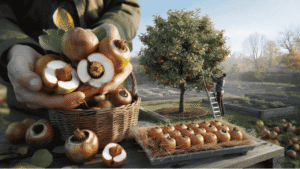
This layering keeps air moving gently between fruits while isolating any that spoil. The filler cushions each apple, prevents moisture pooling, and buffers temperature swings.
(Image suggestion: /mnt/data/1d62bbcc-7a55-440c-aacc-4625ff4ea419.png — “Layered apple crates for winter storage”)
Handle fruit gently — a bruise today is a soft spot tomorrow and a mold bloom next week.
Picking and Sorting

Harvest when days cool and nights crisp. Avoid rainy days; wet skins rot quickly. Roll each apple upward from the branch — a keeper separates easily with a small twist. Keep short stems attached, never wash, and dry surface dew before packing.
Be ruthless when sorting:
- Keep only firm, spotless fruit.
- Use immediately anything with blemishes for sauce, crisps, or cider.
- Discard windfalls — they carry hidden bruises and fungal spores.
Tip: Picking from the tree, not the ground, adds weeks to your storage life.
Choosing the Storage Spot
Look for a place that stays dark, cool, and stable — around 4–8°C.
Good options:
- A ventilated cellar or root store.
- A shaded garden shed against a north wall.
- An unheated garage, well away from car exhaust.
Avoid anywhere bright or damp: laundry rooms, boiler closets, or kitchens. Keep apples away from pears, bananas, and kiwis — they exhale ethylene gas and accelerate ripening.
The Routine Check
Every two to three weeks, open crates briefly:
- Remove any fruit that feels soft or smells off.
- Let air circulate for a few minutes to clear ethylene.
- If apples shrivel, lightly mist the sand (not the fruit).
- If you see condensation, dry the filler and air the space.
Neglect a store for a month and you could lose the lot; five minutes of care saves boxes.
| Problem | Cause | Fix |
|---|---|---|
| Moldy patches | Excess moisture | Air crates, dry filler |
| Wrinkled skins | Low humidity | Add lightly misted sand tray |
| Fermenting smell | Ethylene buildup | Ventilate room |
| Rot chain | Bruised apple left in | Remove bad fruit immediately |
Rotation and Use
Old growers planned for succession eating. Early apples like Discovery or Gravenstein were eaten fresh; mid-season varieties for pies; and the hard, late keepers carried families through winter.
Eat from the least firm crates first, saving dense russets for January and February.
Turn small or damaged fruit into juice, cider, or dried rings straight away.
Hygiene and Safety
Clean crates with hot water and vinegar before packing. Dry them thoroughly. Shake out straw and bake damp sawdust to remove spores. Keep pets and rodents out of stores. Use a max–min thermometer to spot cold dips — a frozen apple turns glassy, then collapses once thawed.
Crate storage beats fridges for backyard and community growers: no energy draw, no drying fans, and no mixing of fruit with onions or cheese. It’s scalable, simple, and rooted in the same principles that sustained markets a century ago.
FAQs
Why store apples in sand or straw?
It buffers moisture, keeps fruits from touching, and allows airflow that slows decay.
What’s the best temperature for apple storage?
Between 4–8°C (39–46°F) — cool but not freezing.
Can I mix varieties in one crate?
Avoid it. Different types release ethylene at different rates, which can shorten shelf life.
How often should I check the crates?
Every 2–3 weeks for soft or rotting fruit. Remove bad apples immediately.
How long will properly stored apples last?
Late keepers can hold three to five months if cool, dark, and dry.