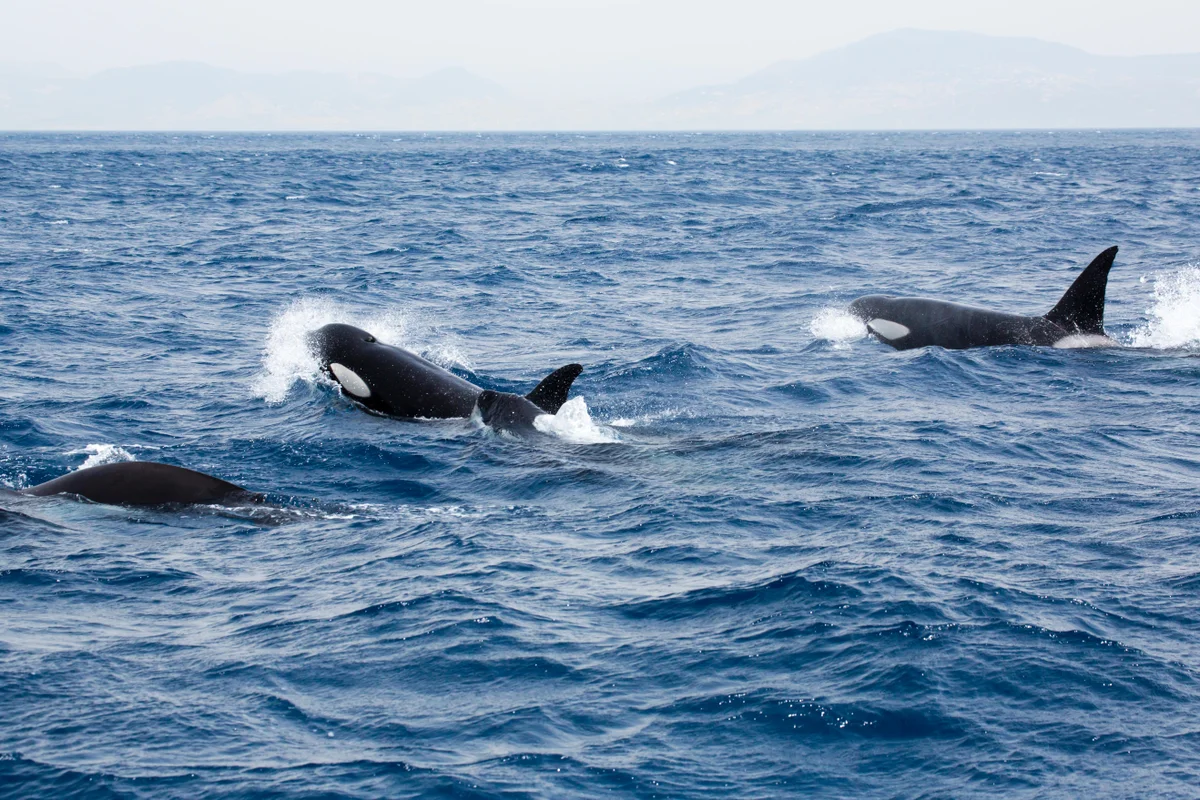
It began as a handful of strange nights off Galicia—half-heard stories swapped between wheelhouses—but by 2024 the pattern felt unmistakable. Orcas were no longer occasional shadows in the wake; they were recurring characters in captain’s logs from Finisterre to the Strait of Gibraltar. If you spend enough time near the Iberian coast, you’ve heard the chatter on VHF: pods approaching from astern, circling, nudging, then going straight for the rudder as if they’d studied a ship’s anatomy. Mariners adjust course mid-season. Insurers quietly rewrite risk models. And what once felt like folklore is now a line item in operating procedures.
A New Pattern on an Old Sea
Anyone who works the North Atlantic knows how quickly routines get rewritten. But even seasoned skippers admit these encounters feel different. Spain and Portugal’s maritime authorities have watched the same play out: orcas approaching from behind, homing in on the rudder, and working in small cohorts with a kind of deliberate patience. Scientists hesitate to use emotional language, yet terms like social learning, coordinated behavior, and cultural transmission are no longer academic whispers—they’re part of the briefings.

According to data collated by the Grupo de Trabajo Orca Atlántica (GTOA)—a long-standing community science project—more than 700 interactions have been logged since 2020. The dataset has grown large enough that shipping companies and fisheries managers treat it like a seasonal chart. While most incidents involve sailing yachts under 15 meters, commercial skippers aren’t immune. Coasters have reported stern bumps that rattle cabinets. Trawlers have had lines fouled during sudden turns to protect their props. And in May 2024, a sailing vessel sank after repeated strikes near the Strait of Gibraltar, despite seasoned hands aboard.
To be clear, large cargo ships rarely suffer damage. Their rudders sit deep, their prop wash is enormous, and their steel is unforgiving. But for the smaller end of the fleet—the human-scale vessels—the interaction feels intimate in a way that rattles the stomach.
Why Rudders? The Science Behind the Behavior
If you talk to biologists at the Portuguese Institute for Nature Conservation and Forests (ICNF) or Spain’s Ministry for Ecological Transition, the explanations tend to cluster around three ideas—a Venn diagram of curiosity, sensory reward and rapid learning.

Rudders vibrate. They hum. They leave swirling turbulence at the stern. For a highly tactile, echolocating predator, that’s irresistible stimulus. Many experts suspect the behavior began as a kind of fad—something a few juveniles tried, then repeated, then taught to others in the small Iberian orca population.
But there’s an ecological backdrop too. Bluefin tuna—these orcas’ main prey—shift seasonally and are influenced by climate variability and fishing pressure. Stress and novelty often drive experimentation. Whether this is curiosity, play, frustration, or some mix, the truth is likely complicated. And intentions? Human words don’t map neatly onto wild behavior.
Still, one thing seems clear: the animals appear to understand where control lives on a vessel. They push, test, wait, and occasionally disable. If that doesn’t count as learned, it’s close.
How Mariners Are Adapting

Out at sea, the best playbook is the one you’ll actually use when adrenaline spikes. Iberian authorities now promote the same guidance you’ll hear at any dock from Vigo to Cascais: slow, quiet, predictable.
Many skippers reduce speed, lock the helm midships, and—if safe—take the engine to neutral. The idea is simple: take the thrill out of the “game.” A rudder that stops vibrating is less interesting. A wake that calms offers less sensory payoff.
The mistakes are textbook: trying to outrun the pod, jerking the wheel, banging on the hull. Those moves escalate the drama. Orcas are curious, not deaf.
Here’s the refined approach echoed in Spanish and Portuguese advisories, including notices from Dirección General de la Marina Mercante and ICNF:
- Slow to minimum steerage or shift to neutral if conditions allow.
- Lock the wheel midships—don’t saw the helm.
- Move crew forward; keep hands and feet away from the stern.
- Don lifejackets and keep radios on Channel 16 for updates or distress.
- Log pod size, position, and duration once safe; report to local maritime authorities.
- After departure, test steering gently and divert to the nearest port if control feels compromised.
Those steps sound tedious until you’re the one staring at a black-and-white body surfacing just feet from your transom.
The Human Side of a Strange New Reality
Every mariner I’ve spoken to returns to the same word: uncanny. Not aggressive. Not cinematic. Just strange—an intelligence brushing against human machinery.
A Galician skipper told me he idled the engine and watched two juveniles trace lazy loops around the rudder while a larger female hovered like a supervisor. After six long minutes, the pod drifted off. He lit a cigarette with hands that shook just a bit, then turned for port. No tall tales. No bravado. Just relief.
Down the coast, fishermen offer competing theories over morning coffee: dwindling tuna stocks, adolescent boredom, a “teacher” female passing on a technique. Some explanations are half-jokes; others hold water. Social mammals learn quickly, especially when the reward loops are rich—vibration, immediate feedback, clear cause and effect.
What nobody disputes is how quickly the pattern spread.
Where Policy, Risk and Ecology Intersect
As interaction numbers rise, the bureaucratic machinery hums into motion. Spain and Portugal have mapped “interaction zones,” issued seasonal advisories and requested route adjustments for smaller boats. Whether these guidelines become outright regulations will depend on how 2025 and 2026 unfold.
Insurers have begun recalibrating premiums in known hotspots, treating the phenomenon like a new category of navigational hazard. And shipping companies are updating standing orders—tighter stern watches, new drill scripts, more frequent steering checks.
None of this is dramatic on its own. But taken together, it marks a subtle shift: the sea feels different, and institutions are adjusting alongside the crews.
What This Says About the Ocean—and Us
There’s a recurring sentiment at Iberian ports: the ocean feels more crowded than it used to. Not with vessels, but with presence. Awareness. Fins in the periphery. The encounters force a kind of humility on mariners who thought they’d mastered these waters.
Most interactions end safely. Most vessels emerge without damage. Yet even a harmless encounter leaves the impression of being studied. Watched. Evaluated.
We build routines; animals build cultures. The friction point is where those cultures meet.
If there’s a lesson here, it’s not fear. It’s adaptation—slowing down, gathering data, keeping tempers low, remembering that coexistence often depends on the least dramatic decision in the moment. That’s as much a policy principle as a deck rule.
Key Takeaways for Mariners
| Point clé | Détail | Intérêt pour le lecteur |
|---|---|---|
| Hotspots and timing | Galicia, Portuguese coast, Strait of Gibraltar; peak from late spring to autumn | Plan routes and watches with seasonal awareness |
| Why the rudder | Vibration, wake turbulence, clear feedback when movement stops | Helps choose calmer, low-stimulus responses |
| Practical response | Slow, quiet, predictable; crew forward; log and report | Builds a routine that protects vessel and crew |
Fact Check: What Do Official Sources Actually Confirm?
This phenomenon is real, documented, and monitored, but context matters.
- Spain’s Ministry of Ecological Transition and the Portuguese ICNF have issued public advisories acknowledging recurrent interactions and offering guidance.
- The GTOA dataset is community-reported but widely used by researchers.
- No government has classified these interactions as “attacks,” and authorities stress they remain rare relative to total maritime traffic.
- Most damage incidents involve small sailing vessels, not commercial ships.
Reliable information can be found through:
- Portugal’s ICNF advisories: https://www.icnf.pt
- GTOA community reports: https://www.orcaiberica.org
FAQs
Are orcas intentionally attacking boats?
There’s no scientific consensus on “intent.” Most researchers describe the behavior as learned, tactile, and exploratory.
Are commercial ships at risk?
Very rarely. Large vessels sit too deep and generate too much turbulence for meaningful interaction.
What kind of boats are most affected?
Sailing yachts under 15 meters remain the majority of reported cases.
Are authorities doing anything?
Yes. Spain and Portugal issue seasonal guidance, map high-interaction zones, and maintain incident reporting networks.
What should crews do during an encounter?
Reduce speed, avoid steering changes, keep crew forward, and report once safe.